About This Book
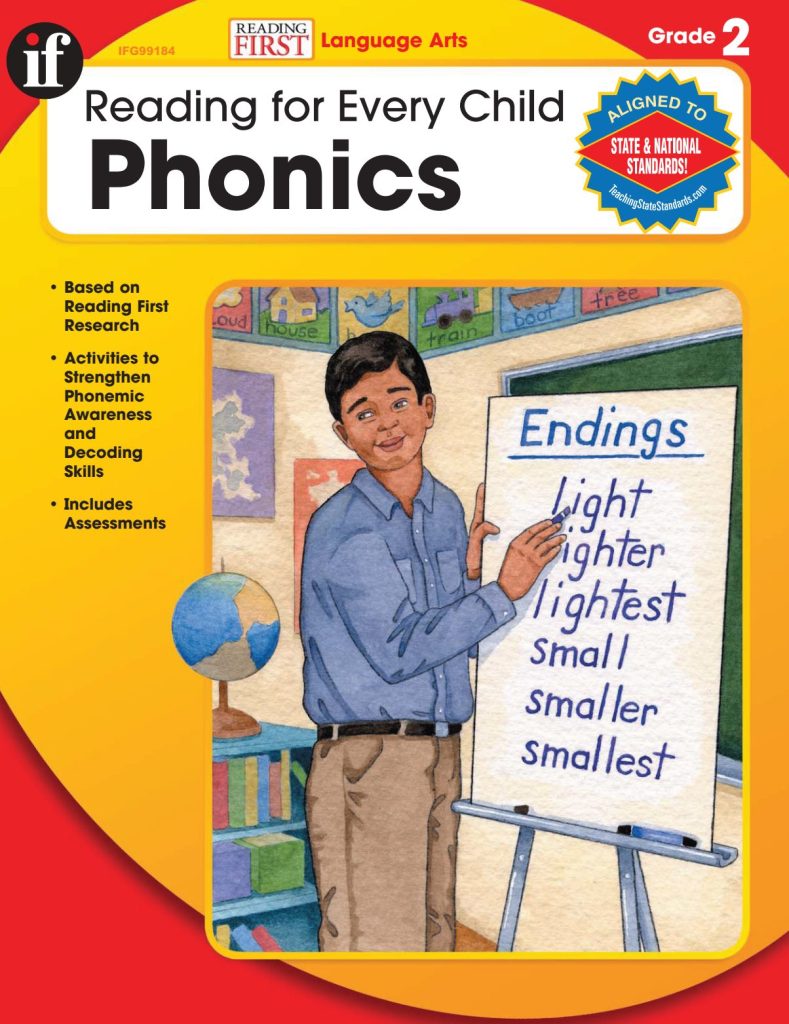
Reading for Every Child Phonics Book 2 is Book 2 of the phonics strand of Reading for Every Child — the series’ systematic programme for teaching young children to decode English print. Its served file carries a generic series name, ‘Reading for Every Child 2′; the file’s own internal title identifies it as the series’ Phonics volume for this level (Grade 2). Phonics is the strand that teaches the code itself: which letters and letter-groups make which sounds, and how sounds blend into words a child can read without being told.
At Book 2 the code gets interesting. The single-letter sounds are assumed; the work now is the combinations — the pairs and patterns whose sounds cannot be guessed from their parts — and the fluency that comes when decoding stops consuming all the child’s attention. This is the stage reading researchers watch most carefully, because it is where the Matthew effect in reading begins: children whose decoding becomes automatic read more, and reading more makes everything easier, while children still labouring over sounds read less and fall behind in every subject at once. A well-built Book 2 is therefore a small act of educational justice. Its practice is cumulative by design, new patterns introduced against a background of mastered ones, words chosen so that nearly everything on the page is decodable with what the child already owns, and success — the feeling of a page finished unaided — treated as a teaching instrument in its own right. Teachers use such a book daily and briefly, the phonics session as reliable as a heartbeat; parents hear its progress without needing it explained, in the simple fact of a child reading signs, labels, and lines aloud that were silent last term.
What Learners Will Practise
Sound Patterns and Blends
Children practise the combinations at the heart of Book 2: letter groups that make single sounds, common spelling patterns, and the blending of longer words part by part. Each new pattern is met inside words immediately, because a sound pattern is only learned when it has unlocked print the child cares about.
Decodable Reading Fluency
The book practises reading connected text built from the patterns taught so far: short passages a child can finish alone, reread faster, and understand while reading. Fluency is the stage’s real target — the moment decoding becomes quiet enough for meaning to walk in.
Spelling the Same Code
Children practise the code in reverse: hearing sounds and choosing the letters that write them. Encoding cements decoding, and the child who can spell a pattern owns it in both directions, ready for the writing every subject will soon demand.
Key Features
The systematic accumulation is the feature: every page decodable with the patterns taught so far, so effort is spent on reading, not guessing. The strand’s place inside Reading for Every Child is the second — phonics feeding directly into the comprehension the series exists to build — and the daily-session design the third, built for short, regular, successful practice. In this collection it stands on the phonics shelf.
Who This Book Is For
Young children in the early primary years are its first audience, typically those who have mastered the first sound set and are ready for combinations. Their teachers form its second readership, running the daily phonics session the timetable protects. Parents make its third, supporting decoding at home with the same patterns school is teaching.
How to Use This Book
Little and daily is the law of phonics: short sessions, every school day, ending while the child is still succeeding. Let children reread favourite pages — repetition is fluency being built, not laziness. At home, listen rather than correct; supply a stuck word kindly and let the reading continue, because the habit being formed is larger than any single word.
Related Books
The comprehension shelf’s first book stands at Reading for Every Child Comprehension Book 1, and the Smart Junior shelf’s first book waits at Smart Junior Student’s Book 1.